.png)
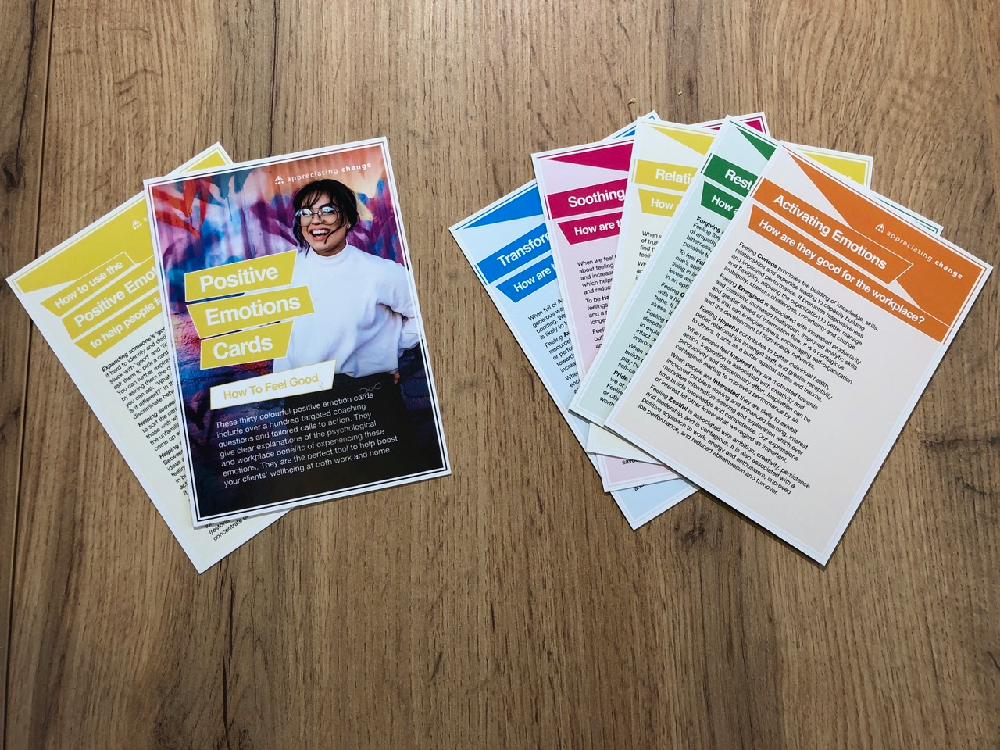 Who is Boosting Happiness at Work for?
This exercise is designed to help people at work to identify and focus on the opportunities at work to experience positive emotions. It will be useful for wellbeing consultants and other workshop leaders, as well as team leaders and managers. It can be particularly useful in difficult and challenging workplaces where opportunities to notice, experience and savour moments of happiness or good feeling can be overlooked.
Who is Boosting Happiness at Work for?
This exercise is designed to help people at work to identify and focus on the opportunities at work to experience positive emotions. It will be useful for wellbeing consultants and other workshop leaders, as well as team leaders and managers. It can be particularly useful in difficult and challenging workplaces where opportunities to notice, experience and savour moments of happiness or good feeling can be overlooked.
Who is Boosting Happiness at Work for?
This exercise is designed to help people at work to identify and focus on the opportunities at work to experience positive emotions. It will be useful for wellbeing consultants and other workshop leaders, as well as team leaders and managers. It can be particularly useful in difficult and challenging workplaces where opportunities to notice, experience and savour moments of happiness or good feeling can be overlooked.
Who is Boosting Happiness at Work for?
This exercise is designed to help people at work to identify and focus on the opportunities at work to experience positive emotions. It will be useful for wellbeing consultants and other workshop leaders, as well as team leaders and managers. It can be particularly useful in difficult and challenging workplaces where opportunities to notice, experience and savour moments of happiness or good feeling can be overlooked.
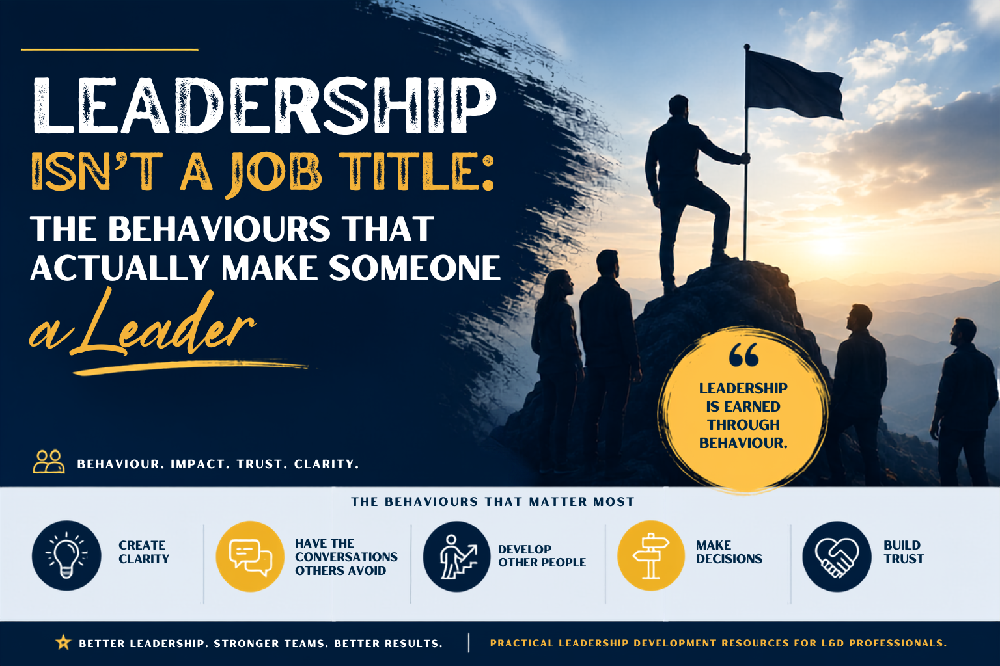 There’s a moment in almost every organisation when someone gets promoted into management and everyone quietly assumes they are now a leader.
New title.
New responsibilities.
Maybe a bigger salary.
Perhaps even an office with a door.
There’s a moment in almost every organisation when someone gets promoted into management and everyone quietly assumes they are now a leader.
New title.
New responsibilities.
Maybe a bigger salary.
Perhaps even an office with a door.
 You can feel it in the room before anyone says it.
The agenda is sensible. The people are senior. The business problem is real. And yet the conversation has the energy of a damp Monday.
Someone offers a careful, polished sentence. Another person nods. Nobody disagrees. Nobody commits. Then, after the meeting, the real conversation happens in the corridor, on Teams, or in the car park.
You can feel it in the room before anyone says it.
The agenda is sensible. The people are senior. The business problem is real. And yet the conversation has the energy of a damp Monday.
Someone offers a careful, polished sentence. Another person nods. Nobody disagrees. Nobody commits. Then, after the meeting, the real conversation happens in the corridor, on Teams, or in the car park.
 If you facilitate leadership sessions long enough, you start spotting ambiguity the way an ops manager spots a loose bearing: you can’t always see it at first, but you can hear the grind.
It usually arrives dressed as something polite.
• “We just need to align.”
• “We’re not clear on priorities.”
• “We need better communication.”
And then, five minutes later, someone says the quiet bit out loud:
“We’ve had this conversation three times already.”
If you facilitate leadership sessions long enough, you start spotting ambiguity the way an ops manager spots a loose bearing: you can’t always see it at first, but you can hear the grind.
It usually arrives dressed as something polite.
• “We just need to align.”
• “We’re not clear on priorities.”
• “We need better communication.”
And then, five minutes later, someone says the quiet bit out loud:
“We’ve had this conversation three times already.”
 Imagine....You’re in a glass-walled meeting room that was meant to be “a quick catch-up”.
The M.D. (Mark) is sat forward, elbows on the table, doing that half-smile that says I’m listening while their foot taps under the chair.
The People Director (Helen) has a notebook open, pen poised, and the expression of someone who has said the same thing three different ways already.
Obvious? We’re flat out. Order book’s decent. The factory’s running. Customers are shouting. We don’t need a philosophy lecture - we need output.
Imagine....You’re in a glass-walled meeting room that was meant to be “a quick catch-up”.
The M.D. (Mark) is sat forward, elbows on the table, doing that half-smile that says I’m listening while their foot taps under the chair.
The People Director (Helen) has a notebook open, pen poised, and the expression of someone who has said the same thing three different ways already.
Obvious? We’re flat out. Order book’s decent. The factory’s running. Customers are shouting. We don’t need a philosophy lecture - we need output.