.png)
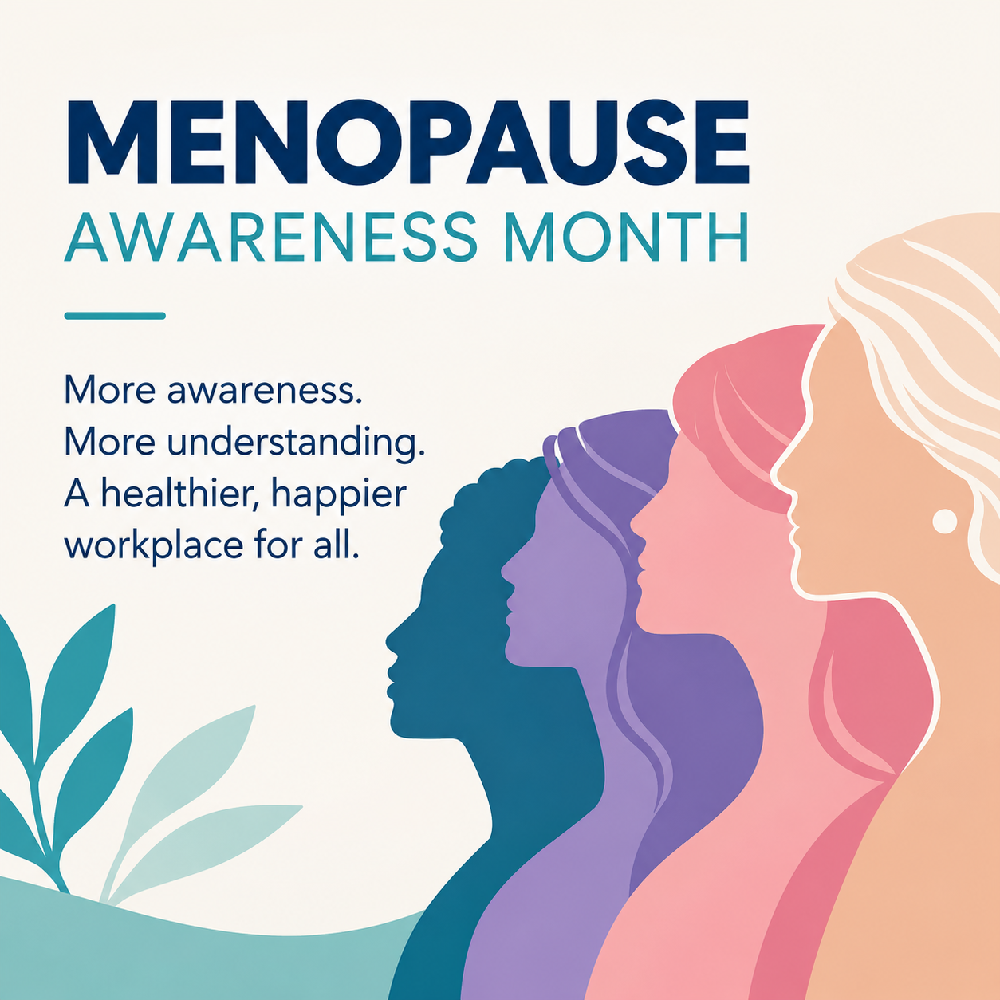 From Awareness to Action: Is Your Workplace Truly Menopause Inclusive?
September's Perimenopause Awareness Month started some important conversations. For many women, the changes begin long before periods stop, yet it can take time to connect the dots. I've spoken to women who thought they were simply exhausted, losing confidence or no longer coping as well as they used to. They didn't realise perimenopause might be part of the picture.
October gives us the chance to build on that understanding. It's Menopause Awareness Month, with World Menopause Day on 18th October and Surgical Menopause Awareness Day on 30th October. I love that these dates get people talking but I also want to ask employers something: when the posters come down and October is over, what will actually be different for your people?
I'm Alison Allen, founder of Sparks HR Consultancy Ltd. I'm a Chartered Fellow of the CIPD, a qualified Menopause Coach and a Workplace Menopause Specialist. I've spent more than 25 years working in HR and Learning & Development, and I still work with employers on the everyday challenges of managing people. That combination is why this matters so much to me. I see what happens when people are supported well, and I see the consequences when they aren't.
From Awareness to Action: Is Your Workplace Truly Menopause Inclusive?
September's Perimenopause Awareness Month started some important conversations. For many women, the changes begin long before periods stop, yet it can take time to connect the dots. I've spoken to women who thought they were simply exhausted, losing confidence or no longer coping as well as they used to. They didn't realise perimenopause might be part of the picture.
October gives us the chance to build on that understanding. It's Menopause Awareness Month, with World Menopause Day on 18th October and Surgical Menopause Awareness Day on 30th October. I love that these dates get people talking but I also want to ask employers something: when the posters come down and October is over, what will actually be different for your people?
I'm Alison Allen, founder of Sparks HR Consultancy Ltd. I'm a Chartered Fellow of the CIPD, a qualified Menopause Coach and a Workplace Menopause Specialist. I've spent more than 25 years working in HR and Learning & Development, and I still work with employers on the everyday challenges of managing people. That combination is why this matters so much to me. I see what happens when people are supported well, and I see the consequences when they aren't.
 Part A covered the theory each simulation brings to life. Part B is about choosing well.
A useful way to think about these tools is this: each one is a spotlight. It shines on a particular constraint supervisory capability, team fundamentals, operations flow, negotiation across teams, virtual collaboration, or innovation. If you pick the wrong spotlight, you still get learning but it wont land where the business needs it.
L&D teams don’t use simulations because they’re “fun”. They use them because a good simulation does something most workshops struggle to do: it makes invisible dynamics visible, discussable, and repeatable.
This two-part blog compares eight classic simulations and team games, not as “paper vs online”, but as theories-in-action. Each one owns a slightly different learning space. None is “best”; each is best for a specific constraint.
 Part A covered two tools that often get treated as interchangeable (they’re not): DISCStyles (observable interaction behaviour) and the Jungian Personal Style Inventory (preferred ways of perceiving and deciding).
Now let’s add the third tool, then make the differences so clear your reader can choose in two minutes without the “astrology” effect.