.png)
Who is Boosting Happiness at Work for?
This exercise is designed to help people at work to identify
and focus on the opportunities at work to experience positive emotions. It will be useful for wellbeing consultants and other workshop leaders, as well as team leaders and managers. It can be particularly useful in difficult and challenging workplaces where opportunities to notice, experience and savour moments of happiness or good feeling can be overlooked.
How does it help with Boosting
Happiness at Work?
The exercise enhances peoples’ capacity for experiencing
positive emotions at work.
by asking them to focus their attention on identifying when they feel positive at work. It then encourages them to explore more deeply what makes that possible, what such feelings mean to them, and how they can expand their experiences of feeling good.
In addition, talking about positive emotions and remembering
positive emotional states tends to produce positive emotions in the moment. In
this way, the exercise works on two levels at the same time: the present and
the future.
Preparation
Organise your participants in groups of 3-6 people, four is
a good number, around a table. Give each table a pack of cards.
How to run the exercise
Ask each group to separate out the title card, the ‘how to use’ card, and the information cards from the pack (there are 5 of these information cards)
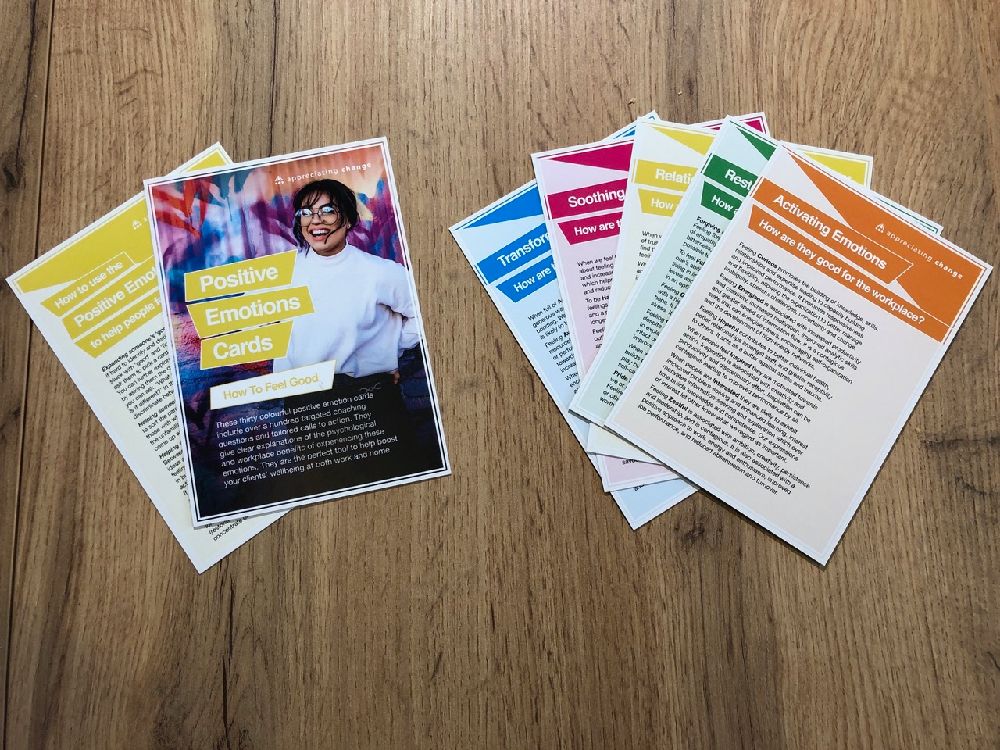
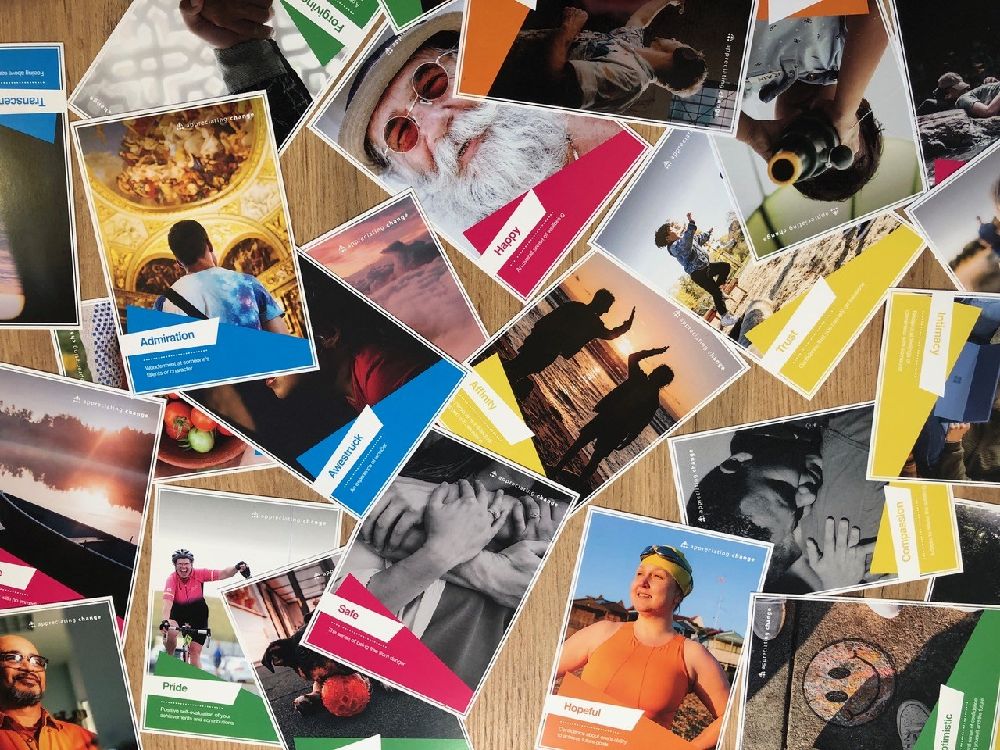
Then ask them to spread
the remaining thirty
cards out on the table,
picture side up
Part One
Then, ask that, in turn, everyone at each table:
- Selects a card that is meaningful to them in a work context
- Explains a little bit why they choose it
- Then turns it over and selects one of the questions on the
back to stimulate some group discussion.
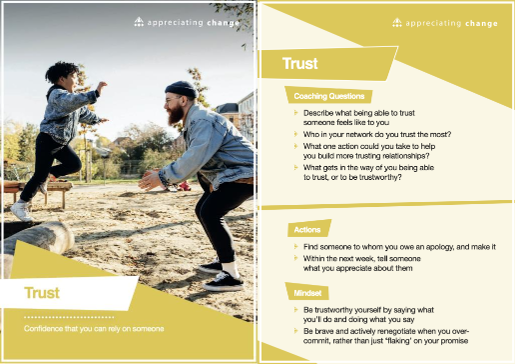
For example, someone might pick trust, then might turn it over and choose to discuss the
question ‘Describe what being able to trust someone feels
like to you?’
I would allow 10-15 minutes for each person in the group to have their turn.
Once everyone has had a turn at that you can of course take
some feedback, or you can move straight into part two of the exercise.
Note, this can be used as a ‘firelighter’ warm up exercise,
by missing out the third part of the exercise and instead just asking each
person to identify a positive emotion that is meaningful to them and to explain
why, before moving on the next person in their small group.
Part two
This time, ask each person in the group, in turn, to
- Select an emotion that they would like to experience, or
experience more frequently, at work
- Then, to turn the card over and select an action or mindset suggestion to ‘talk to’, that is to think, and talk, about how it might work for them. Naturally this can evolve into a group discussion about the action point chosen.
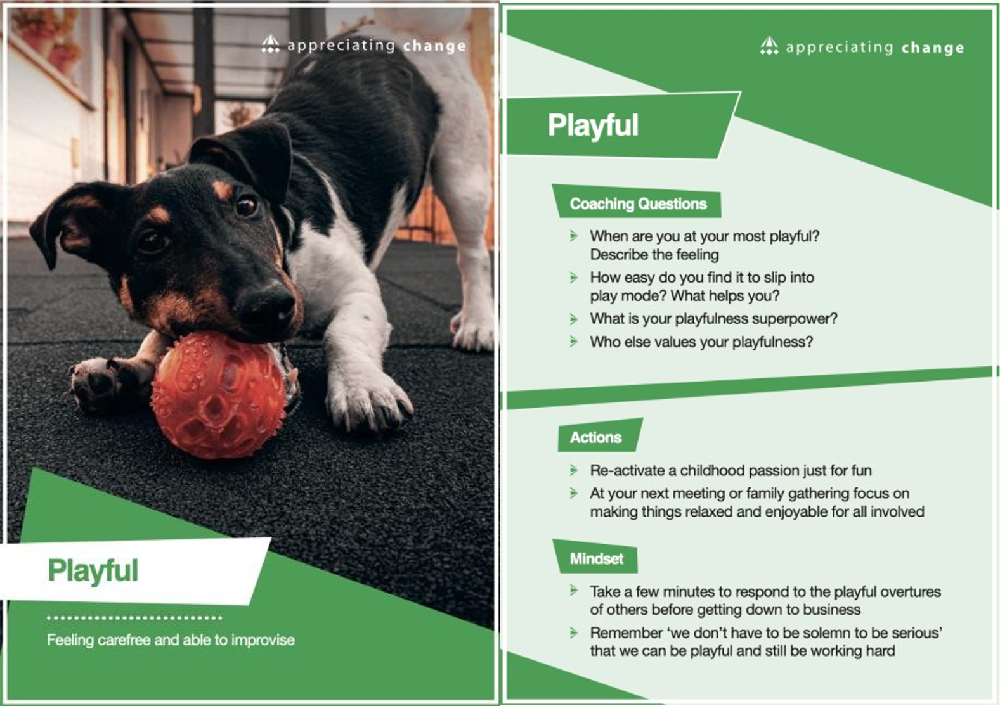
For example, someone might choose playful, and want to talk
about the idea that ‘we don’t have to be solemn to be serious’, that we can be
playful and still be working hard.
With colleagues help, they could explore how adopting that
attitude could make it easier to find moments to be playful at work while still
being focused on achieving outcomes. And to think about the impact of that on
forming positive relationships, or other work challenges, for example.
An extension of the exercise
If additional time is available, this extension of the exercise allows people to better understand the benefits of feeling
good
Part three
Ask each person, in turn, in each group, to
- Select an
emotion they are interested to know more about
- Then to
refer to the appropriate information card to share what it says about how that
emotion is good for the individual and good for the workplace
- The group
can then discuss their observations or experiences of these positive effects
before moving on to the next person
For example, someone might pick Transcendence as an emotion they are curious about. The information card explains the positive impact of experiences of transcendence on our mental health, and on pro-social behaviour at work.
For everything you need to know about Positive Emotions Cards for Boosting Wellbeing and Happiness just follow the link.
Developing on time available, you can encourage the groups or group to extend their discussion of the role of positive emotions in boosting happiness at work