.png)
If you’re an L&D professional, you’ve probably had this moment - someone asks for “a personality tool” for a team day, a leadership programme, or a coaching cohort.
They don’t really mean personality (and they definitely don’t mean a 40‑page psych textbook). They mean - something credible that helps people work better together, quickly, without drama.
That’s where style assessments earn their keep - and where they get misused.
Because “style” tools often get lumped together, it’s easy to buy the wrong one for the job. Then the debrief turns into labelling (“She’s a D”, “He’s an introvert”), the team laughs, and three weeks later nothing has changed.
So let’s do this properly.
In this two-part guide I’ll compare three MLR options - not by whether they’re paper or online, but by the theories they’re built on, the results they produce, and the spaces they each own. None is “best”. Each is valuable when used for the right purpose.
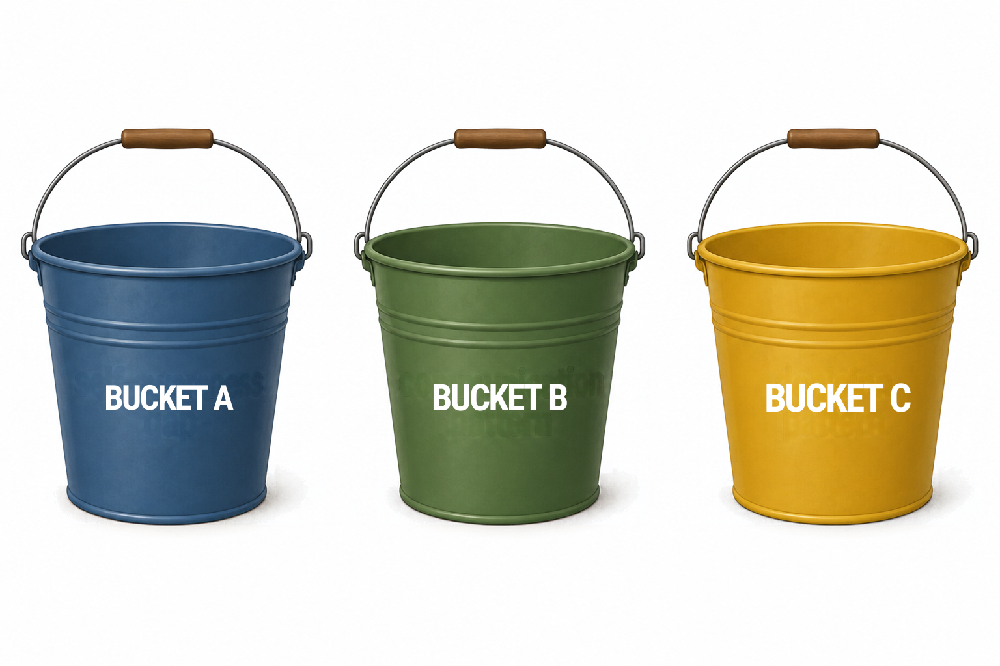
The trusted-advisor question - what problem are you actually solving?
Before we talk tools, get clear on the job-to-be-done. Most requests fall into one of three buckets -
- Bucket A - “We need better day-to-day interactions.” Communication, conflict, customer conversations, cross-functional friction.
- Bucket B - “We need deeper self-awareness and appreciation of difference.” Team cohesion, decision-making, leadership maturity, reducing misinterpretation.
- Bucket C - “We need practical insight for coaching, career, and role effectiveness.” Development planning, career transitions, role fit, personal effectiveness.
Here’s the punchline - these three tools map neatly to those three buckets.
Tool 1 - DISCStyles - the behavioural lens (what people do in interaction)
The model it’s built on
DISCStyles sits in the DISC family - a four-category behavioural model that groups observable behaviour patterns.
On the MLR product page, the four profiles are described using two dimensions - directness and openness - resulting in:
- Dominant (direct and guarded)
- Interactive (direct and open)
- Steady (indirect and open)
- Cautious (indirect and guarded)
A practical design feature is that the assessment uses three interpersonal settings (work, home, social) to increase context realism, and plots three standard interpretive graphs.
What results you get
You get a behavioural style profile that is easy to translate into “what I do” and “what you see”. It’s immediately usable for:
- communication preferences
- conflict triggers
- how to flex your approach with different people
- team working agreements
Strengths (why L&D teams love it)
- Fast shared language - teams can talk about behaviour without turning it into judgement.
- Highly practical - it naturally leads to “try this instead” actions.
- Great for mixed audiences - it works well when participants vary in seniority and confidence.
Watch-outs (how it gets misused)
- Labelling risk - “I’m a D, that’s just how I am” becomes an excuse rather than a development plan.
- Over-simplification - four buckets can hide nuance, especially for complex roles.
- Behaviour ≠ motive - DISC tells you what people tend to do, not necessarily why.
Best for (when to choose DISCStyles)
Choose DISCStyles when your primary goal is better interactions -
- team communication resets
- conflict resolution workshops
- sales/service communication
- cross-functional collaboration
- leadership programmes where you want behaviour change you can practise immediately
Tool 2 - Personal Style Inventory (Exploring Personal Style) - the Jungian preference lens (how people prefer to perceive and decide)
The model it’s built on
This Personal Style Inventory is explicitly based on Carl Jung’s theory of personality types. It uses four pairs of preferences and produces a four-letter type (e.g., ISTP).
A key distinction on the product page is the framing versus MBTI:
- MBTI aims to measure how people usually behave.
- This PSI aims to measure how people would prefer to behave.
That matters in L&D. Preference is often closer to the “true” person - but it also means you’ll want to translate insight into workplace behaviour.
What results you get
You get a type preference profile and a structured way to discuss:
- how people take in information
- how they make decisions
- how they relate to structure and spontaneity
- how they recharge and engage
It’s also positioned as a strong team tool - it includes team charts, discussion questions, and guidance for creating a team profile.
Strengths
- Depth without being clinical - it gives a richer explanation of difference than “communication tips”.
- Excellent for team understanding - it reduces misinterpretation (“they’re not being awkward; they’re processing differently”).
- Useful for leadership maturity - it supports reflection and perspective-taking.
Watch-outs
- Type becomes identity if facilitation is weak.
- Preference isn’t performance - a preference profile doesn’t automatically tell you what to do differently at work.
- Needs translation - you’ll get best value when you convert insights into behavioural commitments.
Best for (when to choose Jungian PSI)
Choose this when the goal is self-awareness and appreciation of difference, especially -
- team cohesion and trust-building
- leadership development cohorts
- improving decision-making and problem-solving diversity
- reducing friction caused by misreading intent
What’s coming in Part B
In Part B, we’ll cover the third tool - the Personal Style Indicator - and then I’ll give you a side-by-side comparison table, a simple decision tree, and the “transfer plan” that stops a style session becoming a fun day out.