.png)
There’s a particular kind of team that makes facilitators relax too early.
They turn up on time. They smile. They listen politely. They say things like, “That’s a great point,” and “I can see both sides.” They thank you at the end. They might even clap (which is always unsettling in a meeting room).
And then nothing changes.
Not because they’re stupid. Not because they don’t care. It is often because they’re nice in the way that British weather is “fine”: technically acceptable, quietly limiting, and absolutely not what you asked for.
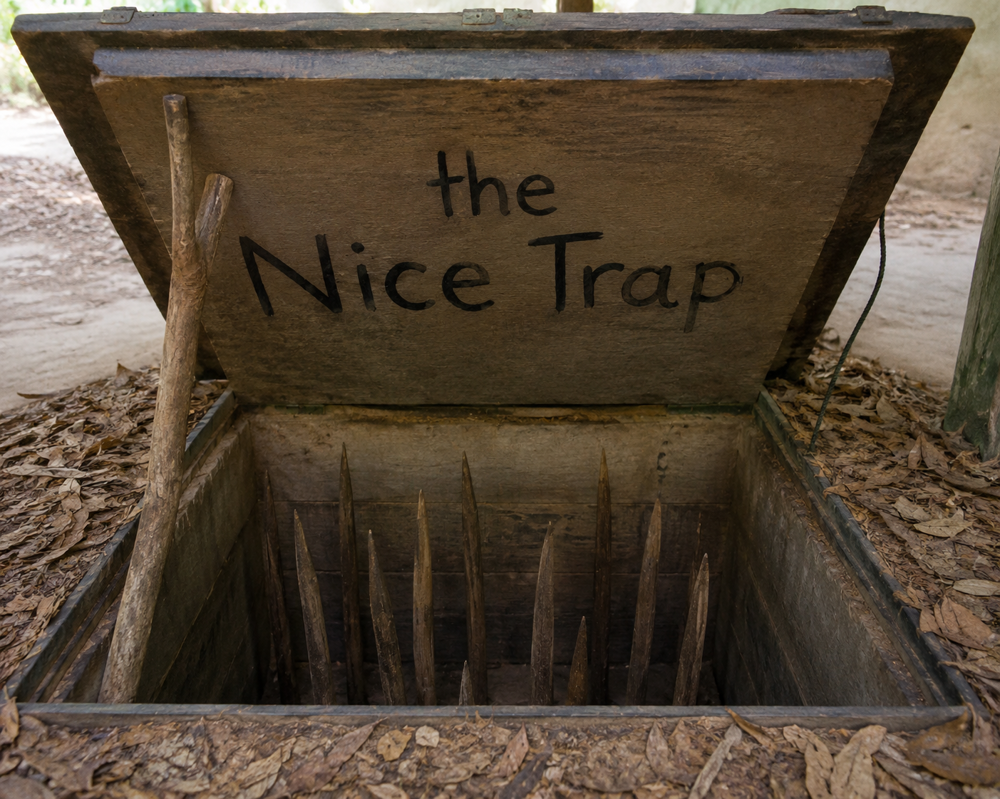
That’s the Nice Trap. Politeness becomes avoidance, and avoidance becomes culture.
What it looks like in the room
You’ll recognise it straight away.
People agree quickly, but commit slowly. They nod enthusiastically, then send a follow-up email that begins, “Just to clarify…” (Translation: I didn’t agree, I just didn’t want to disagree in public.)
They use soft phrases as smoke screens:
“That’s interesting.” “I’m not sure that would land.” “Maybe we should take that offline.”
Decisions get made, then re-litigated in corridors, WhatsApp groups, and the car park. The same issues return every month like a bad sitcom: same cast, same plot, slightly worse jokes.
And if you ask what’s going on, you’ll get the organisational equivalent of a shrug: “It’s just our culture.”
What’s really going on (and why it’s so sticky)
The Nice Trap isn’t about manners. It’s about risk.
In many teams, telling the truth has a cost. You might be seen as difficult. You might embarrass someone senior. You might trigger defensiveness. You might get labelled “not a team player.”
So people do what humans always do when the social risk is high: they protect the relationship by sacrificing the issue.
The irony is that the relationship doesn’t get protected. It gets quietly poisoned. Because what you don’t say doesn’t disappear, it leaks out sideways as sarcasm, disengagement, passive resistance, and “forgetting” to do the thing everyone agreed.
This is why psychological safety is so often misunderstood. It isn’t comfort. It’s the ability to tell the truth without punishment.
Comfort says, “Let’s keep it pleasant.” Safety says, “We can be honest and still be okay.”
Your job as facilitator, coach or trainer is to help the team move from comfort to safety — without turning the room into a boxing ring.
The facilitator’s job: make it safe and make it real
If you only make it safe, you get a lovely conversation with no edge. If you only make it real, you get a fight. The craft is holding both.
Here’s a move that works because it’s simple and it respects dignity.
Step 1: Ask for one specific example
Not a general complaint. Not a personality diagnosis. One observable moment.
“What happened in the last meeting when this showed up?”
Specificity stops the conversation becoming gossip. It also reduces the temptation to exaggerate.
Step 2: Ask for one cost of not addressing it
This is where “nice” starts to wobble.
“If we keep doing this, what does it cost us?”
Cost can be time, rework, missed opportunities, stress, turnover, client impact — whatever is real for them. The point is to make avoidance expensive.
Step 3: Ask for one request they’re willing to make directly
Now you turn insight into action.
“What’s the request you’re willing to make — to the person, not about the person?”
This is where accountability begins: not with blame, but with a clear ask.
The phrase that changes the temperature without starting a fight
There are moments in a session when you can feel the room choosing politeness over truth. It’s subtle: longer pauses, more “maybe,” more careful phrasing.
That’s when you need a clean interruption that doesn’t shame anyone.
Try this:
“How about we swap ‘being nice’ for ‘being clear’ just for the next 10 minutes?”
It works because it’s a temporary experiment. You’re not accusing the team of being cowardly. You’re inviting them to try a different setting.
And if you want to strengthen it, add:
“Clear doesn’t mean harsh. It means specific.”
Now you’ve defined the behavioural standard.
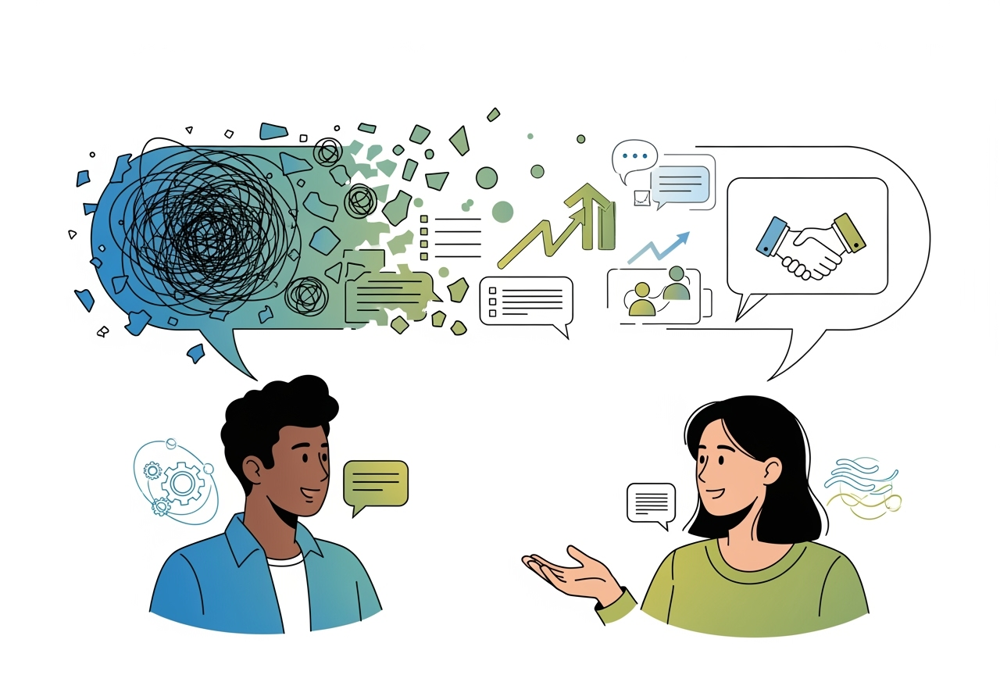
Why assertiveness gets moralised (and how to de-moralise it)
The word “assertive” is a minefield. In some organisations it means “confident and healthy.” In others it means “pushy.” And in more than a few, it means “a man who speaks up.”
So when you tell a team they need to be more assertive, half the room hears, “Be more aggressive,” and the other half hears, “You’re too much already.”
That’s why a profile can be so useful. A good assertiveness diagnostic turns a moral argument into a neutral conversation about patterns:
- When do we hold back?
- When do we come on too strong?
- What do we do under pressure?
- What’s the impact on others?
It gives you language that isn’t loaded. And it gives participants permission to notice themselves without feeling attacked.
The low-friction advantage (why this is worth doing)
Here’s the practical business case you can say out loud.
Most diagnostic inventories are around £30–£50 per person. That’s low friction compared to many L&D interventions. Inventories are often cheaper even with the debrief workshop and hugely more useful than another slide deck that everyone politely forgets.
More importantly, an inventory that the whole team completes creates a shared language that makes the next conversation about ‘being clear rather than nice’ easier. And the next one and the one after that. That’s how culture shifts: not through grand statements, more through repeated moments of clarity over a period of time..
Tool to deploy: Make assertiveness discussable.
If you want a clean way to help teams escape the Nice Trap without turning “speak up” into a lecture, use a tool that maps assertiveness styles and gives you a structured debrief.
Use it when a team begins avoiding disagreement, or decisions are made but not fully owned or people complain privately and comply publicly (often silently).
When you do use an assertiveness inventory, or any inventory don’t let it become the source of labelling, be aware that sometimes “assertive” just becomes “louder,” which is called verbal violence and do keep helping the team translate their insights back to behaviours in their meetings and 1-2-1 conversations.
Next step: buy the participant guides, run a session and get movement.