.png)
Evie Arnold, Leadership & Gallup Global Strengths Coach
There's a moment most managers recognise, even if they've never named it.
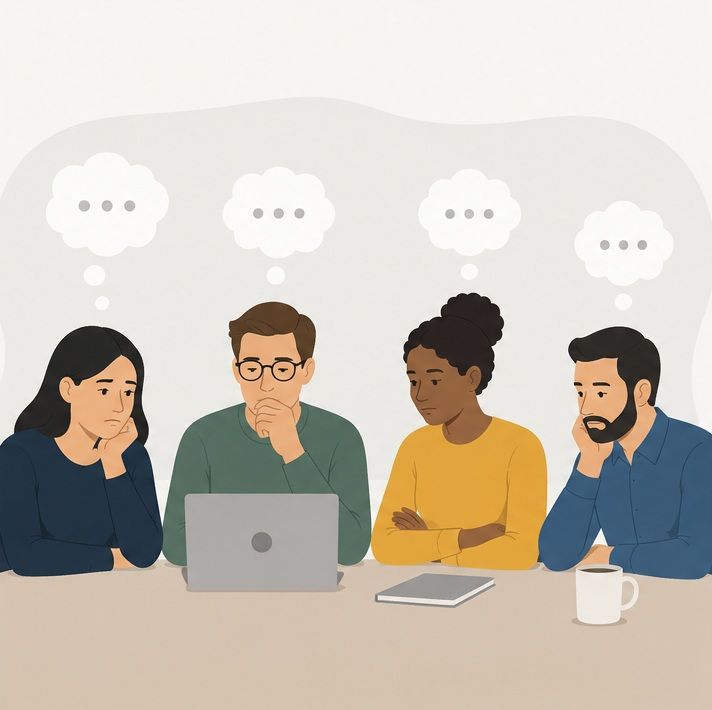
You're in a team meeting. You've just shared a plan, or asked for input, or posed a genuinely open question. And the room goes quiet. Not the productive kind of quiet - the careful kind. The kind where people are weighing up whether it's safe to say what they're actually thinking.
You might fill the silence yourself. Or someone offers a vague "sounds good." And the meeting moves on.
But something important didn't happen. And somewhere, you felt it.
That silence has a name. It's the absence of psychological safety - and it's one of the most significant, and most overlooked, barriers to high-performing teams.
What Psychological Safety actually means
The term was popularised by Harvard researcher Amy Edmondson, who defined it as "a belief that one will not be punished or humiliated for speaking up with ideas, questions, concerns, or mistakes."
In practice, it looks like this: a team member flags a risk before it becomes a crisis. Someone admits they don't understand the brief rather than guessing. A colleague challenges a decision - respectfully, but directly - because they believe their perspective will be heard. A new starter asks a question without worrying it will make them look incompetent.
Psychological safety isn't about being comfortable all the time. It's about feeling safe enough to be honest - even when honesty is uncomfortable.
Google's landmark Project Aristotle study, which analysed hundreds of teams to identify what made them effective, found that psychological safety was the single most important factor. More than talent. More than experience. More than the quality of the strategy. Teams that felt safe to take interpersonal risks consistently outperformed those that didn't.
And yet, for many managers, creating that safety feels abstract. You know it matters. You're not sure exactly how to build it.
This is where CliftonStrengths® comes in.
The connection between Strengths and Safety
Here's the thing about psychological safety that often gets missed: it isn't just about culture or leadership style in the abstract. It's built - or eroded - in the small, specific moments of every working day.
The way a manager responds when someone raises a concern. Whether a team member feels seen and valued for how they contribute, or whether they feel like they're constantly trying to fit a mould that wasn't made for them. Whether people understand each other well enough to extend grace when communication doesn't land perfectly.
CliftonStrengths works at exactly this level. It doesn't just tell you what someone is good at - it reveals how they think, what they need to feel engaged and valued, and how they're likely to show up under pressure. And when a team has that knowledge about themselves and each other, something shifts.
Let me show you what I mean.
How Strengths Build Psychological Safety: Four Ways
1. It gives people a language for difference - and that reduces judgement
One of the most common sources of tension in teams is the silent assumption that everyone thinks and works the same way. When someone processes information slowly and carefully before speaking, they can be misread as disengaged. When someone thinks out loud and changes their mind mid-sentence, they can seem unreliable. When someone needs time alone to do their best work, they can appear unsociable.
Without a shared framework, these differences breed quiet judgement. People feel like they're doing something wrong simply by being themselves.
CliftonStrengths® gives teams a shared language to name these differences without criticism. The person who takes time before speaking might have high Deliberative® or Analytical® - they're not slow, they're thorough. The person who thinks out loud might have high Ideation® or Activator® - they're not inconsistent, they're generative. The person who needs quiet focus time might have high Focus® or Intellection® - they're not antisocial, they're doing their best work.
When people can explain themselves through their strengths - and when their teammates understand that explanation - the space for judgement shrinks. And in its place, something more like genuine curiosity grows.
2. It helps managers respond to people as individuals - not as a uniform group
Psychological safety is not a team-wide setting that you switch on. It's experienced differently by different people, and it's built through individual interactions.
A team member with high Empathy® may need a manager who checks in on how they're feeling about a change, not just whether they understand it logically. A team member with high Significance® needs to know their contribution is visible and valued - being overlooked, even unintentionally, can quietly disengage them. Someone with high Responsibility® may need explicit permission to say no, because their default is to take on more than is sustainable.
When a manager understands these nuances, they can respond to each person in a way that actually lands. And when people feel genuinely seen - not just managed - they're far more likely to speak up, take risks, and bring their full thinking to the table.
3. It surfaces the hidden costs of certain strengths under pressure
Every strength has what Gallup® calls an "edge" - the point at which a strength, overused or applied in the wrong context, starts to create problems.
Harmony® is a beautiful strength in a team context. People with high Harmony® are skilled at finding common ground, reducing friction, and keeping relationships intact. But under pressure, Harmony® can tip into conflict avoidance - and a manager or team member who consistently smooths over tension rather than addressing it can inadvertently signal to the team that it isn't safe to raise difficult things.
Responsibility® creates deeply reliable, trustworthy colleagues. But when it tips into over-commitment, it can model a culture where saying no is seen as weakness - and that's a culture where people don't feel safe admitting they're struggling.
Command® brings directness and decisiveness that teams often need. But if it dominates without self-awareness, it can shut down the quieter voices in the room - the ones who need a little more space before they feel confident enough to contribute.
CliftonStrengths® coaching helps managers and team members see these edges clearly - not to criticise, but to create the self-awareness that allows them to choose a different response. That kind of intentional leadership is what psychological safety is built on.
4. It makes team workshops a genuinely safe experience
There's an irony in team development: the very exercises designed to build trust can feel threatening if the team doesn't yet have enough trust to engage with them honestly.
CliftonStrengths® workshops sidestep this problem beautifully. Because the framework is inherently positive - it focuses entirely on what people do well, not what they lack - it creates a rare kind of conversation where people feel genuinely comfortable being open.
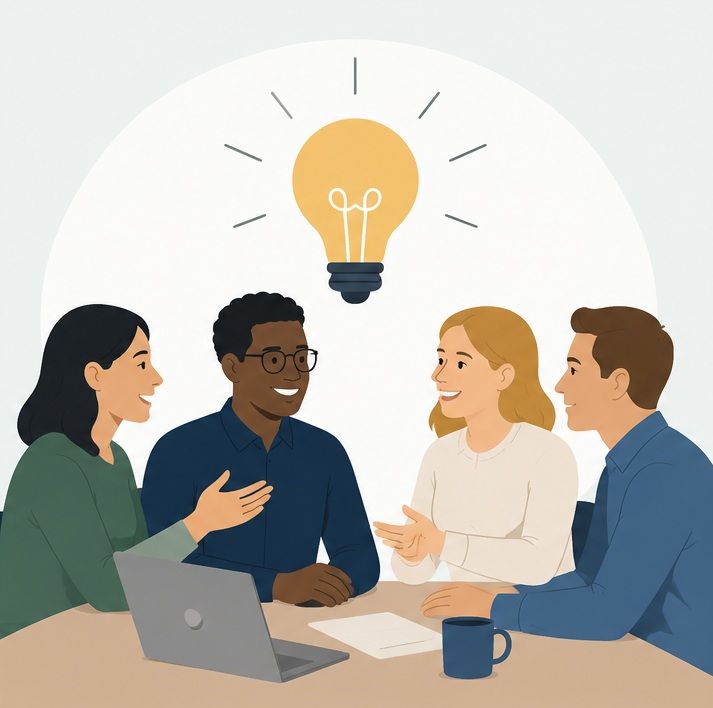
In a well-facilitated strengths session, team members share their top themes, explore how their strengths show up in their work, and begin to understand each other at a level that goes beyond job titles and deliverables. People often describe it as one of the most affirming professional experiences they've had - and that affirmation is itself a foundation for safety.
When someone feels seen and valued in a team setting, they carry that experience into every subsequent interaction. The team becomes a place where it's a little easier to be honest, a little safer to be vulnerable, and a little more natural to speak up.
A note on what Strengths can't do alone
It's important to be honest here. CliftonStrengths® is a powerful tool - but it isn't a magic fix.
Psychological safety also requires consistent behaviour from leaders: following through on commitments, responding to mistakes with curiosity rather than blame, actively inviting dissenting views, and modelling vulnerability themselves. No assessment can substitute for that.
What CliftonStrengths® does is accelerate the process. It gives teams a shared vocabulary, a positive entry point into difficult conversations, and a framework for understanding each other that would otherwise take years to develop organically. Used well - and facilitated thoughtfully - it can be one of the most effective investments a team makes.
Where to Start
If you're a manager reading this and thinking "my team needs this" - here's what I'd suggest.
Start with yourself. Understanding your own top five CliftonStrengths®, and how they shape the way you lead, communicate, and respond under pressure, is the foundation for everything else. It's very hard to build psychological safety in a team if you don't first have clarity about your own edges and defaults.
From there, consider bringing your team together for a strengths workshop. Not as a one-off away-day activity, but as the beginning of an ongoing conversation about how you work together - one that you return to, build on, and weave into the way you lead every day.
That's what Lead Better Every Day looks like in practice.
Work With Evie via MLR
She offers 1:1 CliftonStrengths coaching for managers who want to understand themselves more deeply and lead with greater confidence and clarity.
Evie also facilitates CliftonStrengths team workshops - designed to help teams build a shared language, deepen mutual understanding, and create the conditions for genuine psychological safety.
If either of these sounds like what your team needs right now, we'd love to have a conversation. Lets talk - Contact Us