.png)
If you work in L&D or HR, you’ll recognise the pattern....
Someone senior says, “We need the teams collaborating better.” Someone else says, “Let’s do something engaging.”
A calendar invite appears. People turn up politely.
Everyone has a decent time...

...Then Monday arrives and the organisation resumes its favourite hobby: behaving exactly as it did before.
That’s why the new wave of online simulations is worth paying attention to. Done well, they don’t just entertain. They create a safe, controlled environment where teams can see the impact of their decisions, communication habits, and assumptions in real time - and then do the one thing most training forgets: stop and reflect.
Why simulations are having a moment
Remote and hybrid work didn’t invent team issues, but it did remove the camouflage. In the office, a lot of dysfunction is softened by proximity. Online, the cracks show up faster: unclear decision rights, information hoarding, meetings that substitute for thinking, and the classic “we’re aligned” statement that means “we haven’t tested this under pressure yet”.
Simulations are attractive because they compress reality. They take the messy, slow consequences of organisational behaviour and speed them up into an hour or two. That’s not magic - it’s design.
The best simulations do three things at once. They create pressure (time, trade-offs, competing goals). They make behaviour visible (who leads, who withdraws, who bulldozes, who over-processes). And they make outcomes undeniable (your choices have consequences, even if you meant well).
Two flavours: self-serve games and facilitated simulation experiences
What’s entering the market isn’t one category, but two.
The first is the self-serve or manager-run game. Think browser-based simulations that a reasonably confident line manager can run with a team, or that a cohort can run with minimal support. These tools are popular because they’re quick to deploy and easy to repeat. They’re often used for onboarding groups, early-career programmes, and basic business decision-making practice.
The second is the facilitated simulation experience. This is where the simulation is only half the product. The other half is the debrief: the guided reflection that turns “that was interesting” into “here’s what we’re changing”. These are used for leadership alignment, cross-functional performance, and culture shifts - the situations where you don’t want a nice activity; you want a behavioural reset.
In practice, HR and L&D often buy both. Self-serve tools help you scale. Facilitated experiences help you land the big moments.
The uncomfortable truth: without a debrief, it’s just a game
Here’s the part we don’t say out loud in procurement meetings. A self-serve simulation without a structured debrief is like sending people to the gym and hoping they accidentally learn nutrition.
You might get some benefit. You’ll definitely get sweat. But the real change comes from reflection and repetition.
Even the best self-serve tools need a simple rhythm: a short pre-brief (“what to notice”), the simulation itself, and then a debrief that asks three questions: what happened, so what, now what. If you can add a second short round after the debrief, you get the holy grail of learning transfer: visible improvement.
The hidden barrier: set-up effort
This is where many simulation providers quietly lose deals.
The more a vendor requires briefing, tailoring, train-the-trainer, admin onboarding, and configuration, the more likely an HR/L&D team will think, “We love it… but we don’t have the capacity.”
It’s not that the tool isn’t good. It’s that the internal effort becomes the real price.
On the other hand, serious domain simulations (think supply chain, working capital, complex cross-functional trade-offs) can deliver huge value - but they often come with higher facilitation needs and more discovery work. That’s not a flaw; it’s the nature of the beast.
So where does Teamvine fit - and why that matters
Teamvine sits in a very useful middle ground.
From their own language, Teamvine is built around virtual team building activities that simulate real organisational challenges, and then uses reflection and discussion to help teams develop new ways of working. It’s explicitly designed for the remote and hybrid world, where “we’ll sort it out in the corridor” is no longer a strategy.
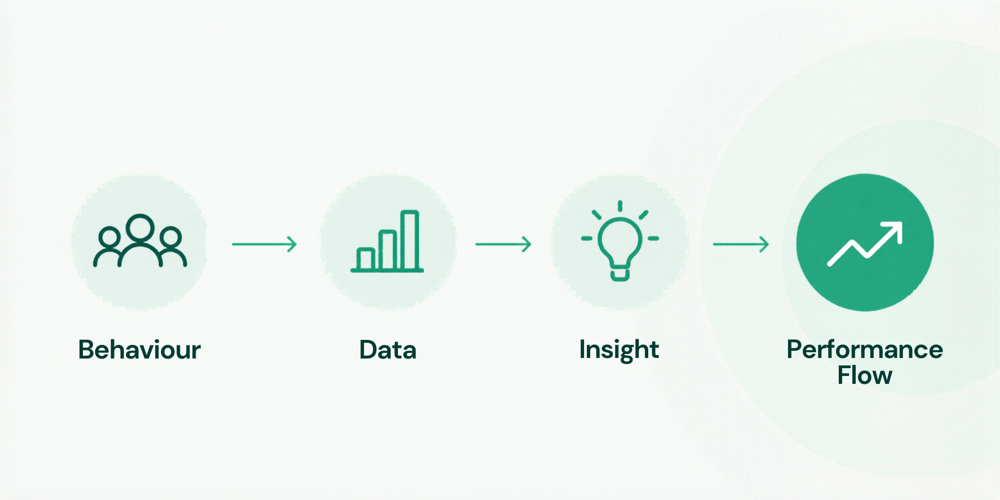
That matters because most organisations don’t need another novelty activity. They need a way to make everyday team behaviour visible, discussable, and changeable - without turning it into a therapy session or a compliance exercise.
The authentic positioning for Teamvine is not “the most complex business simulation on the market”. It’s something more valuable to most HR/L&D buyers: high behavioural impact with low-to-medium set-up friction.
In other words, it can deliver the benefits of facilitated experiential learning without asking the client to become a part-time simulation administrator.
What good looks like (and what HR/L&D should ask for)
If you’re evaluating these tools, the questions are surprisingly practical.
First, how quickly can we deploy this without heroics? If the answer requires three steering meetings and a small sacrifice to the gods of IT, be honest about the capacity you have.
Second, what does the debrief look like? If it’s “have a chat at the end”, you’re buying entertainment. If it’s structured, behaviour-focused, and ends with commitments and follow-up, you’re buying change.
Third, what evidence do we get? Not vanity metrics - insight. A short report that captures patterns, strengths, risks, and agreed actions is gold for HR and L&D because it turns a session into a programme.
Finally, what happens after the session? The best providers build in a 30-day follow-up, even if it’s brief. That’s where the learning becomes a habit.
Pricing bands (and the real cost)
Most vendors in this space don’t publish corporate pricing, so you’ll often see “book a demo” and “request pricing”. That’s normal. Still, you can think in bands.
Self-serve simulations are commonly priced per learner or per cohort, and can feel affordable on paper. Facilitated experiences typically price per event (half-day or full-day) and rise with group size, number of cohorts, and the depth of reporting.
But the real cost is the internal work required. A tool that is cheaper but takes weeks of internal coordination can cost more than a premium session that arrives ready to run.
The bottom line
L&D is moving away from training that tells people what to do, and towards experiences that let them discover what they do under pressure.
Online simulations are part of that shift. The winners will be the tools that combine realism with reflection, and impact with deployability.
If you’re an HR or L&D leader, your job isn’t to buy the cleverest simulation. It’s to buy the one that your organisation will actually run, learn from, and repeat.
Teamvine continues to focus on real organisational challenges, facilitated reflection, and remote/hybrid practicality - it has a very credible claim on the part of the market that matters most: teams who need to work better together, quickly, without a six-month implementation project.